
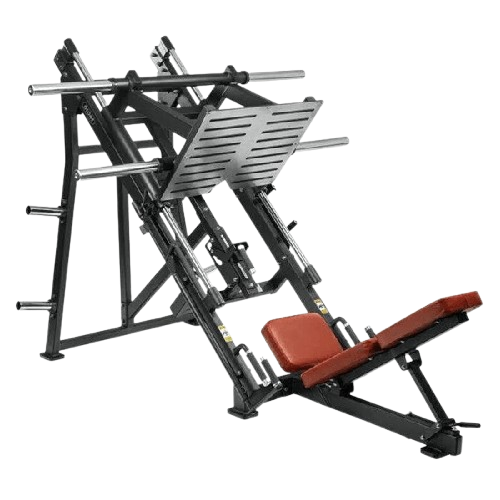
More and more Dutch people are choosing to train at home. A busy schedule, travel time to the gym, and the desire to be able to exercise at any time of the day play a major role in this. Training the legs in particular is receiving increasing attention. Strong leg muscles are not only important for athletic performance, but also for daily movements such as walking, climbing stairs, and lifting.
That is why the demand for an effective leg trainer for home is growing. Many people wonder exactly which muscles they are training, which piece of equipment best suits their goals, and how they can achieve the same results at home as in the gym.
In this guide, you will discover which muscle groups are targeted, what types of leg trainers are available, and what you should look for when choosing the right equipment for your home gym.
Why training your leg muscles is important
The legs form the foundation of almost every movement. Strong leg muscles provide more stability, power, and better posture. In addition, a leg workout burns a relatively large number of calories because large muscle groups are activated.
Benefits of regular leg training include:
• More muscle strength and endurance
• Improved stability and balance
• Higher calorie burn
• Support for knee and hip joints
• Better athletic performance
• Stronger core through functional movements
Whether you want to build muscle mass, lose weight, or just get fitter, a good leg workout should not be missed.
Which muscles do you train with a leg trainer?
One of the most frequently asked questions is: Which muscles do you actually train with a leg trainer?
The answer depends on the type of machine and the exercises you perform.
Quadriceps (front of upper legs)
The quadriceps are located on the front of your upper legs. This muscle group plays an important role in:
• Standing up from a chair
• Climbing stairs
• Jumping
• Squats
Many leg trainers focus heavily on these muscles, especially leg press-like movements.
Hamstrings (back of upper legs)
The hamstrings are located at the back of the upper legs and provide:
• Knee flexion
• Stability during walking
• Explosive power during sprinting
A complete leg workout should not forget this muscle group.
Gluteal muscles (glutes)
Strong glute muscles are important for both athletes and people who sit a lot.
Benefits of well-developed glutes:
• More power during squats
• Better posture
• Less strain on the lower back
• Improved stability
Many pieces of home fitness equipment automatically activate the glutes during pushing and pulling movements.
Calves
The calf muscles provide:
• Stability during walking
• Jumping power
• Support for the ankles
Calf training is often underestimated but plays an important role in athletic performance.
Hip muscles and stabilizing muscles
During many exercises, smaller muscles around the hips and knees also work. These muscles help prevent injuries and improve movement control.
What types of leg trainers are there for home?
Not every home gym has room for large fitness equipment. Fortunately, there are several solutions available.
Leg Press Machines
A leg press is among the most popular machines for leg training.
Benefits:
• Targeted training of quadriceps and glutes
• Relatively safe
• Suitable for beginners and advanced users
• High training load possible
For people who seriously want to build muscle mass, a leg press is often an excellent choice.

A Smith Machine offers many more possibilities than just leg training.
You can perform, among other things:
• Squats
• Lunges
• Calf raises
• Bulgarian split squats
This makes it a popular choice within modern home gyms.
Power Rack with accessories
A power rack offers maximum training freedom.
With a barbell you can perform:
• Back squats
• Front squats
• Lunges
• Romanian deadlifts
performed.
For dedicated strength athletes, this is often the most versatile option.
A strength station combines multiple training options in one machine.
Benefits:
• Compact design
• Full-body workouts possible
• Suitable for families
• Good investment for home use
Many models also include exercises for the legs, so you do not need separate equipment.
With cable systems, you can perform various leg exercises such as:
• Cable squats
• Kickbacks
• Lunges
• Hamstring curls
This makes them particularly popular in modern home gyms.
What is the best leg trainer for beginners?
Beginners often look for a machine that is safe, simple, and versatile.
The best options are usually:
1. Strength station
2. Smith Machine
3. Leg Press
4. Compact cable system
These machines provide sufficient support and reduce the chance of technical errors.
Can you build strong legs at home without a gym?
Absolutely.
Many people think that heavy machines are necessary for muscle growth. In reality, you can achieve excellent results at home with the right equipment.
It is important that you:
• Train regularly
• Progressively increase the load
• Recover sufficiently
• Consume enough protein
A well-equipped home gym can offer the same training quality as many commercial gyms.
Best exercises for strong legs at home
Regardless of which leg trainer you choose, these exercises are among the most effective.
Squats
The king of all leg exercises.
They train:
• Quadriceps
• Hamstrings
• Glutes
• Core
Lunges
Ideal for strength, stability, and muscle balance.
Leg Press
Perfect for targeted muscle building of the upper legs.
Romanian Deadlifts
An excellent exercise for hamstrings and glutes.
Calf Raises
Indispensable for strong calves.
What should you look for when buying a leg trainer?
Many consumers search online for:
"Which leg trainer should I buy?"
When comparing models, these factors are important:
Available space
Measure the available space beforehand.

Training goals
Do you want to:
• Lose weight?
• Build muscle mass?
• Improve overall fitness?
Your goal determines which equipment fits best.
Maximum load
Always check how much weight the equipment can handle.
Expansion options
Some systems can be expanded later with additional accessories.
Training variety
The more exercises that are possible, the longer the equipment remains interesting.
Common mistakes in home leg training
Using too little resistance
Muscles only grow when they are sufficiently challenged.
Training only the front of the legs
Many athletes forget their hamstrings and glutes.
Poor technique
Correct execution remains important, even at home.
Insufficient recovery
Rest is essential for muscle growth.
Which leg trainer fits your home gym?
The ideal choice depends on your situation.
For beginners, a power station is often a smart investment because of its versatility.
For fanatic strength athletes, a power rack offers more training options.
Those looking for maximum safety and ease of use often choose a Smith Machine.
When the focus is entirely on the legs, a leg press remains one of the most effective options.
Conclusion
A good home leg trainer helps you build strong, functional, and muscular legs without being dependent on a gym. Depending on your goals, available space, and budget, you can choose a power station, Smith Machine, power rack, or leg press.
By training regularly and using the right equipment, you can achieve excellent results at home. Strong legs form the foundation of a powerful body and contribute to better performance, more stability, and a healthier lifestyle.
Frequently Asked Questions
Which muscles do you train with a leg trainer?
Most leg trainers work the quadriceps, hamstrings, glutes, calves, and various stabilizer muscles around the hips and knees.
What is the best leg trainer for home?
That depends on your goal. For versatility, many people choose a power station or Smith Machine. For pure leg training, a leg press is an excellent choice.
Can I build leg muscle mass at home?
Yes. With enough resistance, regular training, and proper nutrition, you can effectively build muscle mass at home.
Is a Smith Machine suitable for leg training?
Yes. With a Smith Machine, you can perform exercises like squats, lunges, and calf raises, making it a versatile choice for home.
How often should I train my legs?
For most people, one to three leg workouts per week are sufficient to build strength and muscle mass.
Compact power stations and cable systems are often suitable for smaller spaces and apartments.
What is better: a leg press or a squat rack?
A leg press is simpler and safer for beginners. A squat rack offers more training variety and functional strength development.
Which home gym equipment is most suitable for complete leg training?
A combination of a power station, Smith Machine, or power rack typically offers the most training options for both beginners and advanced athletes.