
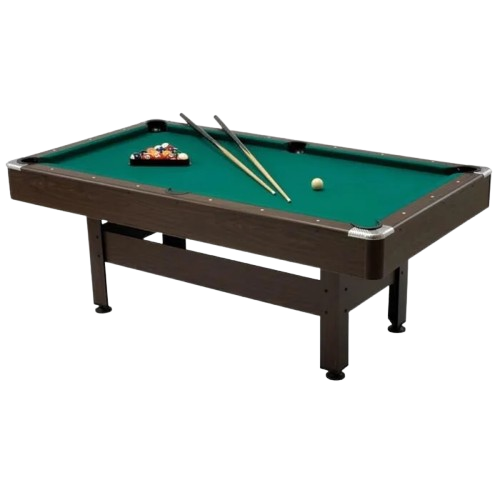
Purchasing your own pool table instantly adds atmosphere, dynamics, and relaxation to a home, office, or recreation room. At StrayShop, we notice daily that enthusiasts look forward with great excitement to their first game of pool in their own environment. Yet, just before the actual delivery of the pool table, a very practical question often arises: how do you actually get that large, heavy structure safely to the desired location? Transporting a pool table requires significantly more planning than just clearing a corner in the living room or attic.
The path from the truck to the final installation spot is sometimes full of unexpected logistical challenges. A narrow front door, a low passageway, or a sharp turn in the stairwell can significantly hinder the process of moving it in. To ensure that the entire process proceeds smoothly and without damage, we have compiled this comprehensive guide. In it, we explain exactly how to measure the passageway step-by-step, which hidden obstacles we need to avoid, and how to optimally plan the logistics in advance.
Why the physical size of a pool table is often underestimated
A pool table is a robust piece of furniture with very specific physical characteristics that differ from regular furniture. Even a more compact model, such as a 6ft pool table or 7ft pool table, easily weighs between 80 and 180 kilograms. If we look at more professional 8ft or 9ft versions with a stone slab, the total weight quickly increases to between 300 and 500 kilograms. This weight is not distributed over mobile or flexible parts but is primarily concentrated in the playing surface and the solid wooden frame.
Poor preparation when delivering heavy furniture too often leads to delays or situations where the delivery team simply cannot proceed. Having to reschedule a delivery causes unnecessary time pressure and additional logistical costs. By looking at the dimensions and weights with a critical eye in advance, we prevent damage to the walls, the door frame, and the playing surface.

The difference in weight: slate versus MDF
The base material of the playing surface is decisive for how the table must be transported. An MDF pool table is equipped with a wooden playing surface consisting of a single slab. These tables are significantly lighter in weight, which aids portability. However, the challenge with this type of table lies in the rigidity of the slab. The playing surface cannot be bent or disassembled, meaning the entire surface of, for example, 220 by 120 centimeters must pass through every hallway and door frame in its entirety.
With a slate pool table, on the other hand, the playing surface usually consists of three separate, extremely heavy stone slabs. This makes the weight per component very high, but logistically, it offers more flexibility for narrow passageways. The frame is built on-site, after which the loose slate slabs are carried in one by one and assembled. Both construction types therefore require their own unique logistical approach.
Packaging dimensions versus the actual table size
A common misconception is looking only at the assembled dimensions of the pool table. An assembled 7-foot game table has a length of approximately 225 centimeters and a width of 125 centimeters. However, when measuring, we must always base our calculations on the packaging dimensions. To protect the table against bumps during transport, it is wrapped in thick cardboard, Styrofoam, and often a sturdy wooden frame.
Additionally, delivery staff need physical space to hold the box and lift it safely. A hallway that is exactly as wide as the packaging box to the millimeter is insufficient in practice. There must always be sufficient workspace for the carrier's hands and the necessary tilting space at corners.
The measurement protocol: Mapping the transport route step by step
Carefully measuring passageways requires a structured approach. We recommend walking the entire route that the delivery staff will take, armed with a tape measure and a notepad. Start outside at the truck and finish in the room where the table will actually be assembled.
1. Access via the front door and exterior
The clear passage of the front door is the first critical point of the route. When measuring this, we do not measure the width between the walls, but the actual space that remains when the door is opened as far as possible.
- Width of the frame: Measure the distance from the inside of the open door to the edge of the frame.
- Height of the doorway: Measure the height from the threshold to the top of the frame.
- Exterior situation: Check if there is a sharp step, a narrow driveway, or fencing that hinders the turn to the front door.
2. Narrow hallways, halls, and tricky turns
A hallway often seems spacious enough at first glance, but a long box has great difficulty with right-angled corners. A turning radius during furniture transport requires extra length and width at the point where the turn is made.
- Wall-to-wall distance: Map the narrowest point of the hallway, taking into account protruding skirting boards and fixed cabinets.
- 90-degree corners: Ensure that the space measured diagonally at the turning point is significantly larger than the width of the box.
- Ceiling height in the hall: Check whether the box can possibly be tilted vertically to make a short, tight turn.
3. The challenge of the stairwell and interior steps
Bridging a floor level is the most challenging phase of the transport. Bringing a pool table upstairs via an indoor staircase requires extremely precise measurements and sufficient muscle power.
- Stair width: Measure the free distance between the wall and the handrail. Can the railing possibly be unscrewed temporarily?
- Height of the stairwell: Measure the slanted and vertical space between the steps and the ceiling above. A low ceiling prevents a long slab from being tilted through.
- Type of stairs: A straight staircase rarely poses a problem. A staircase with a quarter turn at the top or bottom requires the package to be tilted in mid-air, which can be impossible with heavy slate slabs or wide MDF tables if the ceiling is too low.
- Upper landing: Check whether there is sufficient depth at the end of the stairs to catch the package horizontally before it enters the room.
4. The doorway of the final playing area
Once the landing has been navigated, the final hurdle awaits: the door to the game room. Interior doors in more modern and older homes are often narrower than front doors. Measure the exact interior door width and check whether the door can be fully opened 90 to 180 degrees without furniture in the room blocking the path.
Hidden obstacles that subtly reduce the passage
During a logistical inspection of the house, we regularly encounter apparent details that significantly reduce the effective passageway. Unfortunately, it is often these small elements that cause unexpected delays on the day of delivery itself.
- Wall decor and lighting: Hanging lamps in the stairwell or paintings and mirrors on the wall can be damaged. Remove these preventively along the entire route.
- Radiators and thermostat valves: A radiator hanging on a narrow hallway wall easily costs 10 to 15 centimeters of valuable width.
- Door handles and hinges: Door handles protrude and can cause scratches or tears to the cardboard or the carriers' clothing. Removing the handles immediately provides extra clearance.
- Slanted roofs in the attic: Many people set up an attic as a recreation room. The slanted walls sometimes make it very difficult to stand a long packaging box upright at the highest point of the stairs.
- Elevators in apartment complexes: Are you using an elevator? Do not rely solely on the permitted weight capacity in kilograms. Determine the diagonal dimensions of the elevator cabin and check the height and width of the elevator doors.
Practical steps to prepare for delivery day
Excellent preparation takes away all the stress and ensures a smooth installation of the game table. We advise our customers at StrayShop to complete the action points below on the day of delivery.
Clearing and protecting the route
Clear the entire transport route from the street to the final installation point of all obstacles. Remove coat racks, shoe racks, loose rugs, and wall decor. Cover the floor with sturdy floor protection or thick cardboard sheets to prevent scratches or dirt on vulnerable parquet or cast floors.
Temporary dismantling of household elements
Unscrew stair railings if the space on the stairs is tight. Remove interior doors from their hinges if the turn into the room is tight. These small interventions take only a few minutes but provide a huge advantage when maneuvering heavy boxes.
Calculating the play space around the table
In addition to the route to the room, the room itself must be ready. Ensure there is enough free play space around the pool table. A standard cue has a length of 140 to 147 centimeters. This means that there must be at least 1.5 meters of free space on all four sides of the table to walls, cabinets, or other furniture. If this space is smaller, players may be hindered by the wall when making shots at the edge.
Alternative transport options for difficult situations
Does the measurement reveal that the internal staircase or hallway is simply too tight for a large table? That does not necessarily mean that a pool table is impossible. There are various alternative solutions to get the equipment to the desired location.
A commonly used method for apartments or upstairs dwellings is the use of a moving lift during transport. If there is a large window or a set of French balcony doors on the first or second floor, the table can be brought up from the outside. This completely bypasses narrow stairwells and tight hallway corners. Always discuss this in advance with the StrayShop customer service team so that we can schedule the correct logistical equipment.
Choosing the right type of table for your specific home
Every home has unique features and limitations. Matching the type of table to the accessibility of the building prevents problems.
- Foldable pool tables: The perfect option for spaces that are used multifunctionally, or for homes with very tight access. These tables are lighter and have a foldable base.
- Dismountable wooden tables: Tables that are delivered in several compact boxes. The frame and legs are assembled on-site, allowing them to pass through almost any doorway easily.
- Three-piece slate tables: The ultimate choice for the serious player. Because the heavy stone slab is delivered in three separate parts, this type (despite its high weight) is often surprisingly easy to transport to an upper floor or basement.
Conclusion: Trouble-free installation through good preparation
Installing a new game table in your home is a fantastic upgrade for the whole family or business. By accurately measuring the entire transport route in advance, taking packaging dimensions into account, and temporarily clearing the route of obstacles, the delivery will proceed quickly and effectively.
Thorough preparation prevents surprises on the day of delivery and ensures that we can enjoy a perfectly placed table from the very first moment.
Read More :
Buying a pool table? Which size fits best in your home
How much space do you need around a pool table to play comfortably