
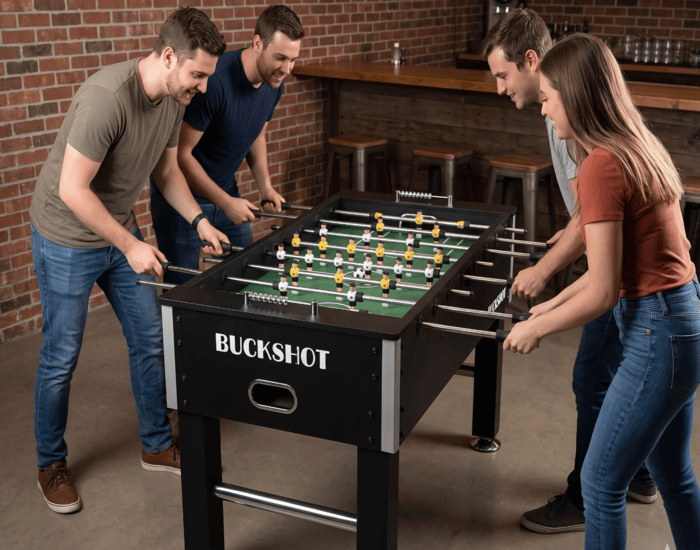
A game of foosball is always fun. Shoot a ball, make a great play and, of course, win! But what if the playing rods move stiffly? Or if your players no longer turn smoothly? Then playing becomes a lot less fun.
Fortunately, this is often easy to fix. With proper maintenance, everything on your foosball table will continue to work smoothly. The parts will also last longer. You don't need to be an expert. A cloth, some mild soap and the right lubricant can do a lot.
In this blog by StrayShop, you'll learn how to clean a foosball table, how to lubricate the playing rods and which mistakes are best avoided. This way, your table will be ready for the next game!
Why is it important to maintain your foosball table?
A foosball table takes quite a beating. During play, the rods move back and forth. The players spin, the ball rolls and players grip the handles tightly. Dust, dirt and grease build up on the parts.
After a while, you'll often notice it yourself.
- The playing rods move less smoothly.
- The handles feel dirty or sticky.
- The players no longer turn properly.
- Dust and dirt accumulate on the playing surface.
- The ball no longer rolls smoothly over the surface.
That's a shame. Of course, you want to be able to play without having to pull on the rods every time.
Regular maintenance prevents many of these problems. It keeps the table clean and ensures that moving parts continue to work properly. You can also spot minor problems sooner. Think of a loose player or a damaged rod.
A clean table simply plays better. It's that simple!
Which parts of a foosball table need maintenance?
Not every part of the table requires the same care. Some parts mainly need cleaning. Other parts need a little extra attention now and then.
1. The playing rods
The playing rods are one of the most important parts. They slide through the openings on the side of the table. If dirt builds up on them, they can move stiffly.
Clean the rods regularly. Also check that they are straight and have no visible damage.
2. The players
Foosball players take quite a beating during play. They hit the ball and can come into contact with each other or other parts of the table.
Clean them with a soft cloth. Immediately check that they are still securely attached. A loose player can seriously disrupt the game.
Is a player broken? Then you can look at the foosball table accessories from StrayShop.
3. The playing surface
The playing surface also deserves attention. Dust and small dirt particles can accumulate here. Remove them with a soft, dry cloth.
Do not use too much water. Moisture can damage the material of some tables.
4. The handles
Handles are often touched. Sweat and dirt can build up here. Wipe them with a slightly damp cloth. Dry them thoroughly afterwards.
5. The bearings
The bearings ensure that the rods can move smoothly through the table. Check them regularly for dirt and wear.
Do you hear strange noises or do the rods not move properly? Then check if there is dirt in the bearings. Replace a damaged part if necessary.
How do you clean the playing rods of a foosball table?
Cleaning properly is the first step. Never lubricate a dirty rod. The dirt can stick to the lubricant. This can sometimes make the problem worse.
Follow these steps.
Step 1: Prepare the foosball table
First, remove all balls from the playing surface. Place the table in a spot where you can easily access the rods.
Check that there are no loose parts. This way you can work undisturbed.
Step 2: Remove dust and dirt
Take a soft, dry cloth. Wipe the playing rods clean with it.
Is there stubborn dirt? Then use a slightly damp cloth. A little mild soap can help. Do not use harsh cleaning products.
Step 3: Clean the openings too
Look closely at the places where the rods pass through the table. Dust can get stuck here.
Clean these parts carefully. Do not use sharp objects. You do not want to damage the bearings or other parts.
Step 4: Dry everything thoroughly
This is important. No moisture should be left on the rods or around the openings.
Use a dry cloth and wait until everything is completely dry. Only then can you continue with lubrication.
How do you lubricate the playing rods properly?
Now comes the most important part. Lubricating the playing rods ensures that they move back and forth more easily.
But beware: not every lubricant is suitable. Preferably use a silicone-based lubricant that is suitable for foosball tables. Always check the manual for your table as well. Some manufacturers give their own advice.
Here is how you do it step by step
- Check the rods. See if they are clean, dry and straight.
- Choose the right lubricant. Use a product that is suitable for the materials of your table.
- Apply a small amount. Do not use too much. A thin layer is usually sufficient.
- Distribute the lubricant. Move the rod gently back and forth. This distributes the lubricant.
- Wipe away excess lubricant. No thick layer should be left behind.
- Test the movement. Move the rods a few times. Do they feel smooth again? Then you are done.
A small amount is often enough. Lubricating more does not automatically mean better play.
Tip: do not use any random oil or grease from the workshop. Some lubricants attract dust or can damage plastic and other materials. So choose consciously.
Which lubricant and cleaner can you use?
Choosing the right product makes a difference. Not every product works well on every foosball table.
Below you can see what to pay attention to.
| Product | Suitable use | Note |
|---|---|---|
| Silicone lubricant | For smoothly moving rods | Check the manual |
| Soft microfiber cloth | For dust and dirt | Do not use a rough cloth |
| Mild soap | For light soiling | Use little water |
| Dry cloth | For drying parts | Leave no moisture behind |
| Aggressive degreaser | Prefer not to use | Can damage materials |
Use a lubricant that is suitable for the rods and bearings of your table. Not sure? Then ask the supplier for advice.
At StrayShop you will find various foosball tables and loose parts. For example, take a look at the foosball table accessories for parts that can make your table complete again.
These maintenance mistakes are best avoided
Good maintenance does not have to be difficult. Yet things sometimes go wrong. Especially with cleaning and lubricating.
These are five mistakes you can better avoid.
1. Using too much lubricant
A thick layer of oil or spray is not necessary. It can actually attract more dust. Preferably use little and only add more when necessary.
2. Lubricating without cleaning first
Dirt and dust can mix with the lubricant. This can make the rods move less smoothly.
So clean everything thoroughly first.
3. Using the wrong oil
Regular machine oil or grease is not always suitable. It can damage parts or attract dirt.
Always look at the manufacturer's recommendations.
4. Using too much water
A damp cloth is not the same as a soaked cloth. Too much moisture can damage wood, MDF and other materials.
So use only a small amount of water.
5. Ignore minor damage
A bent rod or loose player can make the game less enjoyable. Don't wait until the problem gets worse.
Check the parts regularly and replace them if necessary.

How often should you maintain a foosball table?
That depends mainly on how often you play. A table that is used every day requires more attention than a table that is only used on weekends.
A handy schedule helps you remember everything.
| Part | Maintenance |
|---|---|
| Playing surface | Regularly dust |
| Playing rods | Clean regularly |
| Handles | Wipe off dirt |
| Players | Check for damage |
| Bearings | Check for dirt and wear |
| Lubricate rods | When they move stiffly and according to the manual |
Do you play almost every day? Then check the table a bit more often. For light use, less maintenance is often sufficient.
Pay particular attention to how the rods feel. Do they move smoothly? Then you don't need to apply extra lubricant just like that.
When should you replace parts of your foosball table?
Sometimes cleaning or lubricating no longer helps. Then a part may be worn out or damaged.
Pay attention to these signs, for example:
- A rod is bent or damaged.
- A player is loose or broken.
- A bearing makes strange noises.
- A handle is no longer firmly attached.
- The rod continues to move stiffly after cleaning.
In that case, replacement is sometimes the best solution.
At StrayShop you can find various foosball parts. Think of loose players and other accessories. View the selection on the foosball table accessories page.
A part such as a bearing can also be important for the smooth movement of the rod. Always check whether the part fits your brand and model.
A comparison: little maintenance or regular maintenance?
What does maintenance actually achieve? You will notice the difference especially during play.
| Without regular maintenance | With regular maintenance |
|---|---|
| Rods can become stiff | Rods continue to move smoothly |
| Dirt can accumulate | The table stays neat |
| Damage is sometimes noticed late | Problems are discovered more quickly |
| Parts can wear out more | Parts get proper care |
| Playing can be less enjoyable | Playing remains comfortable |
It takes little time to keep your table clean. And let's face it: a clean foosball table just looks better.
Conclusion: keep your foosball table clean and keep playing smoothly
Maintaining a foosball table doesn't have to be difficult at all. With a soft cloth, a little mild soap and the right lubricant, you're already a long way.
Clean the playing rods regularly and dry them well. Then use only a suitable lubricant and apply it thinly. Don't forget the players, bearings, handles and the playing surface.
Check your table occasionally for loose or damaged parts. This way you can quickly address minor problems.
At StrayShop you can find various foosball tables and accessories for even more fun. Whether you play at home with family or hold a match with friends, a well-maintained table makes the difference.
So grab that cloth, check your rods and get your table ready for the next match. Have fun playing!
Frequently asked questions
1. How often should I lubricate the playing rods of my foosball table?
That depends on use. Check the rods regularly. Do they move stiffly? Clean them first and then use a suitable lubricant. Always follow the manufacturer's advice.
2. What oil can I use for a foosball table?
Preferably use a suitable silicone-based lubricant. Regular oil or grease is not always suitable. Some lubricants attract dirt or can damage parts.
3. Can I use WD-40 for my foosball table?
Don't use WD-40 as a lubricant for your playing rods without thinking. It is not suitable for every part and can attract dirt. Better choose a lubricant that is specially suitable for foosball tables.
4. How do I clean the playing rods?
Use a soft cloth to remove dust and dirt. For stubborn dirt, you can use a slightly damp cloth with some mild soap. Dry the rods well afterwards.
5. Why do the playing rods of my foosball table move stiffly?
This can be due to dust, dirt, wear or a damaged bearing. Clean the rods and openings first. Then check the bearings and use a suitable lubricant if necessary. Does the problem persist? Then check whether a part needs to be replaced.